How to Design a Custom private label t-shirts: From Concept to Bulk Production
Design custom private label t-shirts for your brand's success! Get a Free Quote today!
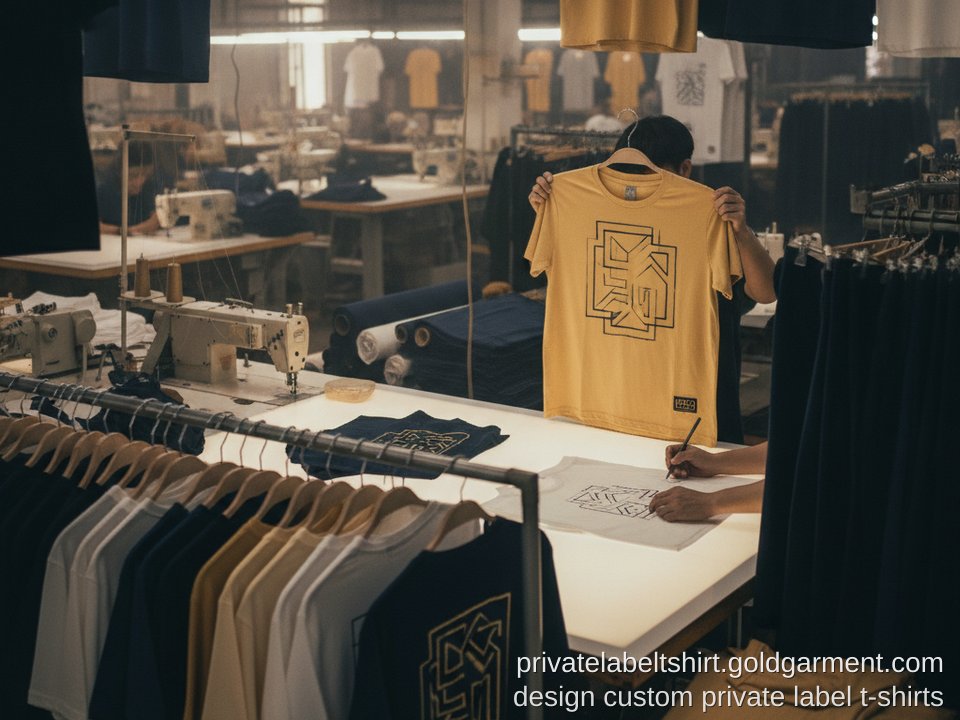
How to Design Custom Private Label T-shirts: From Concept to Bulk Production
Launching a private label t-shirt brand is an exciting venture, especially for designers ready to translate their vision into tangible apparel. The journey from a nascent idea to a finished product involves meticulous planning and execution. At Gold Garment, a leading t-shirt manufacturer based in Ho Chi Minh City, Vietnam, we understand the intricacies of this process. This guide will walk you through the essential steps to design custom private label t-shirts effectively, ensuring your brand stands out in a competitive market.
Developing a successful custom t-shirt collection requires more than just artistic talent; it demands a strategic approach to manufacturing and branding. Understanding each stage, from initial concept to final bulk production, is crucial for a smooth and profitable launch. We aim to demystify this process, providing actionable insights for brand owners and designers.
For those embarking on this path, a clear understanding of manufacturing requirements is paramount. This includes detailed specifications that communicate your design intent precisely to the factory. As shown by the Vietnam factory tech pack guide, a well-crafted tech pack is your blueprint for success.
Our expertise, honed over a decade of t-shirt manufacturing, allows us to support brands from concept to delivery. Whether you're creating unique graphic tees, branded uniforms, or promotional merchandise, the principles of effective design and production remain consistent. We specialize in helping brands bring their ideas to life with factory-direct pricing and a commitment to quality.
1. Conceptualization and Brand Identity
Before you even think about sketches or fabric swatches, solidify your brand's core identity. What message do you want your t-shirts to convey? Who is your target audience? Understanding these fundamentals will guide every design decision you make. Your brand's personality, values, and aesthetic should be consistently reflected in your custom private label t-shirts design for brand.
Defining Your Niche
Identify the specific market segment you aim to serve. Are you targeting streetwear enthusiasts, eco-conscious consumers, or corporate clients needing branded apparel? A well-defined niche helps in tailoring your designs and marketing efforts effectively. This clarity is essential for creating a cohesive collection.
Visualizing Your Aesthetic
Develop a mood board or style guide that encapsulates your brand's visual language. This includes color palettes, typography, graphic styles, and overall mood. A consistent aesthetic ensures that all your t-shirt designs feel like they belong to the same collection.
2. Design Development and Artwork Preparation
Once your brand identity is established, you can begin translating your concepts into actual t-shirt designs. This stage involves both the creative artwork and the technical specifications required for production.
Creating Your Artwork
This is where your creativity shines. Whether you're a seasoned graphic designer or collaborating with one, ensure your artwork is original and aligns with your brand’s aesthetic. Consider the placement, size, and complexity of your graphics. Remember that intricate designs might have different printing implications and costs.
File Specifications for Printing
To ensure your designs are reproduced accurately, you need to provide high-resolution artwork in the correct file format. Most manufacturers, including Gold Garment, require vector files (like AI or EPS) for screen printing to ensure scalability without loss of quality. For other methods like DTG (Direct-to-Garment) printing, high-resolution PNG or TIFF files with transparent backgrounds are often preferred.
Understanding the nuances of custom t-shirt artwork file preparation is crucial. Incorrect file types or low resolutions can lead to blurry prints or unexpected color shifts, impacting the final product's quality. Always confirm the preferred file formats and color modes (e.g., CMYK for screen printing, RGB for some DTG applications) with your chosen manufacturer.
For a comprehensive understanding of how to communicate your design needs, refer to our detailed guide on private label t-shirts: Complete OEM & Private Label Manufacturing Buyer's Guide.
3. Technical Specifications: The Tech Pack
The private label t-shirts tech pack is the single most important document for communicating your design and production requirements to the manufacturer. It's a detailed blueprint that leaves no room for ambiguity.
Essential Components of a Tech Pack
A comprehensive tech pack typically includes:
- Product Sketch: A clear, flat technical drawing of the garment, showing front, back, and any side views.
- Measurements/Spec Sheet: Precise dimensions for each part of the garment (e.g., chest width, length, sleeve length) for each size.
- Fabric Details: Type of fabric, weight (GSM), color, and any special finishes. You can learn more about fabric options in our private label t-shirts Fabric Guide.
- Construction Details: Stitch types, seam finishes, collar construction, hem details, etc.
- Printing/Embroidery Specifications: Artwork placement, size, color codes (Pantone), and printing method.
- Labeling and Packaging: Requirements for brand labels, care labels, hangtags, and polybagging.
- Bill of Materials (BOM): A list of all components needed, including fabric, thread, labels, and buttons.
Why a Detailed Tech Pack Matters
A well-prepared tech pack minimizes errors, reduces the need for revisions, and ensures that the final product matches your vision. It’s the foundation for accurate quoting and efficient production. For a deeper dive into creating one, consult the Vietnam factory tech pack guide.
4. Fabric Selection and Sourcing
The choice of fabric significantly impacts the feel, drape, durability, and cost of your t-shirts. As a t-shirt manufacturer in Vietnam, Gold Garment offers a wide range of fabric options to suit various needs and budgets.
Common T-Shirt Fabrics
Popular choices include 100% cotton (known for its softness and breathability), polyester (for durability and moisture-wicking properties), blends (like cotton-poly for a balance of comfort and performance), and tri-blends (offering a premium, vintage feel). Performance fabrics are also increasingly popular for activewear.
Considering Your Brand's Needs
Align your fabric choice with your brand's positioning and target audience. For a premium feel, a softer cotton or a tri-blend might be ideal. For activewear or durable uniforms, polyester or performance blends are often better choices. Understanding the properties of each fabric is key to making an informed decision.
5. T-Shirt Styles and Fit
Beyond the fabric and graphics, the style and fit of your t-shirt are critical elements of your custom private label t-shirts design for brand. Gold Garment, with over 10 years of experience, understands the importance of offering a diverse range of styles and fits.
Exploring Different Styles
Consider classic styles like the crew neck and V-neck, or explore options like polo shirts and Henley shirts. Each style appeals to different aesthetics and occasions. Our T-Shirt Styles Guide offers a detailed breakdown of popular options.
Achieving the Right Fit
Fit is subjective and can greatly influence customer satisfaction. Do you want an oversized fit, a slim fit, or a more regular fit? Your tech pack should clearly define the measurements for each size to ensure consistency. This is a critical aspect of product development that directly impacts wearability.
6. Sample Production and Quality Control
Before committing to a large bulk order, it's essential to produce samples to verify the design, fit, fabric, and overall quality.
Ordering Samples
Work with your manufacturer to get physical samples of your t-shirts. This is your opportunity to see, feel, and try on the product. Pay close attention to the print quality, stitching, fabric feel, and how the garment fits. This step is crucial for catching any potential issues early on.
The Importance of Prototypes
Samples act as prototypes. They allow you to make any necessary adjustments to the design or specifications before mass production begins. This iterative process ensures that the final product meets your exact standards. A real example of custom apparel production can be seen from Vietnam uniform t-shirt factory Gold Garment.
7. Bulk Production and Logistics
Once you've approved your samples, you're ready for bulk production. This is where your vision is realized on a larger scale.
Minimum Order Quantity (MOQ)
Most manufacturers have a Minimum Order Quantity (MOQ) to make production economically viable. At Gold Garment, our MOQ is as low as 100 pieces per style, making it accessible for emerging brands. Understanding MOQs is vital for budgeting and planning. Our guide on Minimum Order Quantity for private label t-shirts provides more detail.
Factory-Direct Advantages
Working directly with a factory like Gold Garment in Ho Chi Minh City offers significant advantages, including factory-direct pricing, better communication, and more control over the production process. We have extensive experience serving clients in the USA, Europe, Australia, and Southeast Asia.
Shipping and Delivery
Discuss shipping options and timelines with your manufacturer. Gold Garment offers worldwide shipping, ensuring your finished products can reach your distribution points or customers efficiently. Clear communication about logistics is key to a successful launch.
Frequently Asked Questions
Q: What is the most important document for designing custom private label t-shirts?
A: The most crucial document is the private label t-shirts tech pack. It serves as the comprehensive blueprint detailing all aspects of your design, from measurements and fabric to printing and finishing, ensuring clear communication with the manufacturer.
Q: What file format is best for my custom t-shirt artwork?
A: For most printing methods, especially screen printing, vector files like AI (Adobe Illustrator) or EPS are preferred. For Direct-to-Garment (DTG) printing, high-resolution PNG or TIFF files with transparent backgrounds are often suitable. Always confirm the preferred format with your manufacturer.
Q: How do I ensure the fit of my custom t-shirts is consistent across all sizes?
A: Consistency in fit is achieved through a detailed specification sheet within your tech pack. This sheet outlines precise measurements for each garment size (e.g., chest width, length, sleeve length). Providing these exact dimensions to your manufacturer is key to achieving a predictable and consistent fit.
Q: What is the difference between OEM and Private Label manufacturing?
A: In OEM (Original Equipment Manufacturer), a factory produces designs provided by the client. In Private Label, a factory offers its existing designs that a brand can then customize and brand as their own. Understanding this distinction is important when selecting a manufacturing partner. Learn more about the differences in our OEM vs Private Label private label t-shirts Manufacturing: Which Model Fits Your Brand? guide.
By carefully navigating these stages, you can successfully design custom private label t-shirts that reflect your brand’s unique identity and meet the expectations of your customers.
Partner with Gold Garment, your trusted t-shirt manufacturer in Vietnam, to bring your custom apparel vision to life with quality and efficiency.
📩 Request a Free Quote — Response Within 5 Minutes
🌎 Website: privatelabeltshirt.goldgarment.com
Factory-direct pricing · MOQ from 100 pcs/style · Sample development · Worldwide shipping


Nhận xét
Đăng nhận xét